
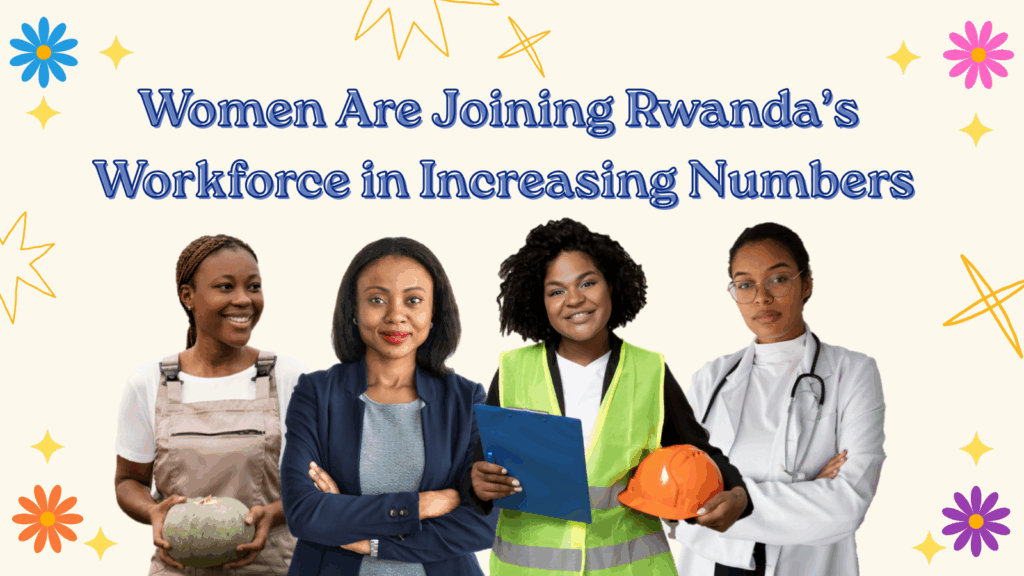
Rwanda’s labour market has shown notable progress in recent years, with declining unemployment and increasing participation among women. According to the latest Labour Force Survey from the National Institute of Statistics of Rwanda (NISR), the national unemployment rate dropped to 13.4 per cent in the second quarter of 2025, down from 16.8 per cent a year earlier. Women’s participation in the labour market has also risen significantly, increasing by 7.4 percentage points between 2020 and 2024.
However, participation is not evenly distributed. Urban women remain more economically active than their rural counterparts, with nearly 65 per cent of urban women engaged in the labour market compared with 51.9 per cent of rural women. Education also plays a major role. Women with university education show an 85.2 per cent participation rate, while those without formal education participate at much lower levels.
Employment outcomes have improved overall, with the proportion of working-age women who are employed rising from 38.5 per cent in 2020 to 45.9 per cent in 2024. Yet gender gaps remain visible across sectors. Agriculture continues to employ the largest share of women, while industries such as construction remain overwhelmingly male-dominated. Even in sectors where participation is closer, disparities in earnings persist. In 2024, women earned significantly less on average than men, reflecting broader inequalities in the labour market.
Beyond wages, differences in time use also shape these outcomes. Women continue to spend more hours on unpaid household and caregiving responsibilities, limiting the time available for paid employment and income-generating activities.
Rwanda’s labour market is growing steadily and more women than ever before are entering the workforce. Although this is a significant achievement, we must not overlook the structural inequalities that continue to limit women’s opportunities. True progress is measured by the ability of women to participate, earn, and advance on equal terms.